

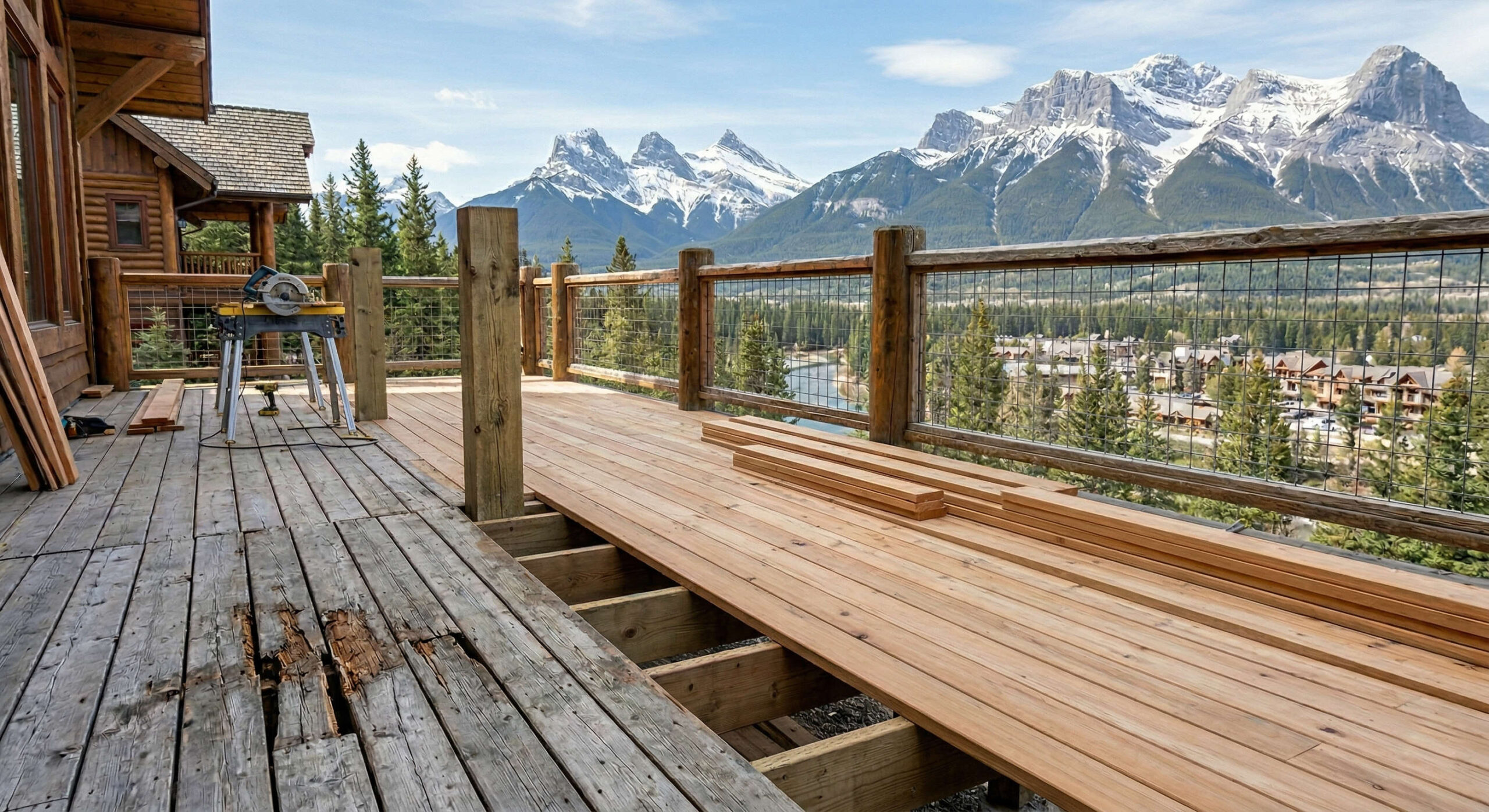
Living in the Bow Valley means your outdoor space is basically your second living room, but between the wild Chinook temperature swings and that high-altitude UV, your deck takes a serious beating. Whether you’re running a mountain-side rental or just trying to enjoy a brew on your own patio in Exshaw, you need to know when your wood is past its prime.
Here is our deck repair advice on spotting rot, knowing when to bring in the pros, and what the timeline for renovations and repair might look like.
Spotting Deck Damage Early
You don’t need to be a journeyman carpenter to see when things are heading south. Walk your deck once the snow clears and keep an eye out for these specific deck-breakers:
- Soft Spots and Spongy Wood: Take a flathead screwdriver and give the boards a poke, especially near the ground or where snow piles up. If it sinks in like butter, congratulations you’ve got rot. Book a Consult.
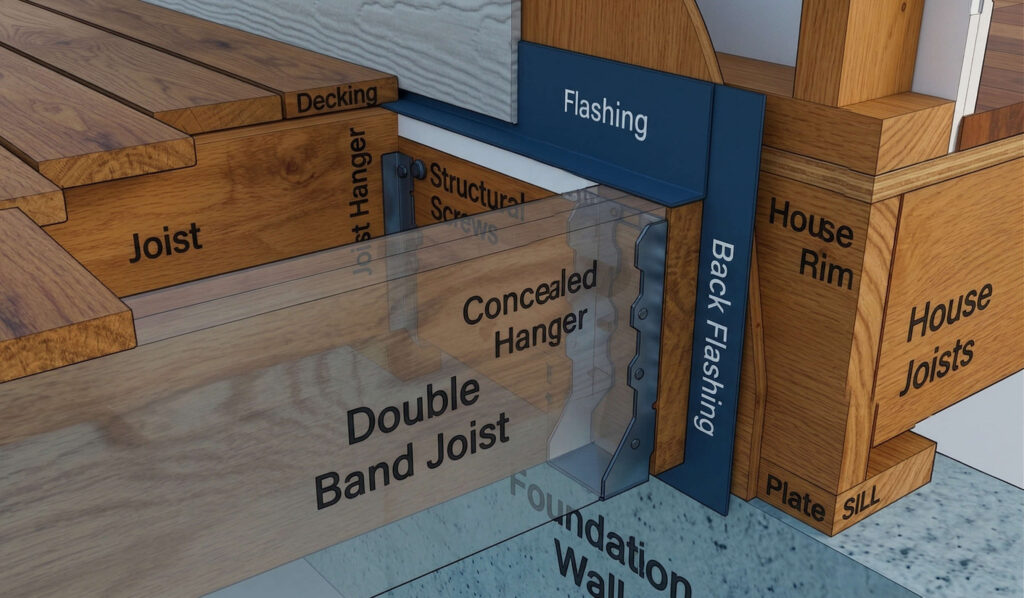
- Ledger Board Separation: This is the most dangerous one. Look at where the deck meets the house. If there’s a gap or the flashing is rusted out, water is getting into your rim joist. That’s a structural nightmare waiting to happen.
- Wobbly Railings: If you lean on your railing and it gives more than a fraction, your post connections are compromised. In a commercial setting, this is a massive liability.
- Rusted Fasteners: If the heads are popping off or the joist hangers look like Swiss cheese from corrosion, the integrity of the whole build is shot.
Knowing When Professional Help Is Non-Negotiable
A lot of folks think they can just slap a fresh coat of stain on and call it a day. Here are the facts: if the structure is compromised, no amount of “mountain cedar” stain will save it.
If you are in the Bow Valley, you should contact us if you see visible sagging in the joists, cracked concrete footings, or if your deck feels like a trampoline when you walk across it. If you’re a commercial property owner, you need a pro just to ensure you’re meeting current Alberta Building Code requirements. Safety isn’t something you want to “guess” at when you have guests or tenants involved.
Timeline Expectations For New Installations
Every project is different, but here is a rough breakdown of how we usually see these mountain builds go:
| Phase | Estimated Time | What Is Happening |
| Permits & Design | 2 – 4 Weeks | Dealing with the town or MD and getting those blue-prints approved. |
| Demo & Site Prep | 2 – 3 Days | Ripping out the old rot and checking the ground for proper drainage. |
| Framing & Structure | 4 – 14 Days | Setting the new posts, beams, and joists. The “bones” of the deck. |
| Decking & Railings | 7 – 14 Days | Installing the actual boards (composite or wood) and the safety rails. |
| Final Details | 1 – 7 Days | Trim work, stairs, and site clean-up. |
Total Average Time: 2 to 5 weeks of active construction. This is based on past work and should not be accepted as a work schedule. All projects are unique and present a unique set of challenges. We won’t know your estimated time to completion until you book a consult.
Managing Job Site Realities
When you hire a crew, expect a bit of a circus in your yard for a couple of weeks. There will be saw dust, the hum of impact drivers, and likely a pile of pressure-treated offcuts tucked in a corner.
A solid renovator will keep the site tidy, but remember that weather is the boss in the Rockies. If a spring blizzard rolls through Canmore, we’re going to be delayed a day or two. We also need to account for “surprises” behind the old ledger board. If we find rot in your house’s sheathing once the old deck is off, we have to fix that first. It’s better to do it right once than to have me back in five years fixing the same mistake.
Choosing Right Materials For Mountain Living
Don’t just pick the cheapest lumber at the big box store. In our climate, composite decking (like Trex or TimberTech) is a huge plus because it doesn’t warp in the sun or splinter after a freeze-thaw cycle. If you’re dead set on wood, go for pressure-treated sienna or Western Red Cedar, but be ready to sand and stain it every two years to keep it from turning grey and brittle.
Invest in your outdoor space properly. It’s the difference between a deck that lasts thirty years and one that becomes a liability before the decade is out.